Understanding and Managing Maths Anxiety in the Classroom
Uncategorized
Education
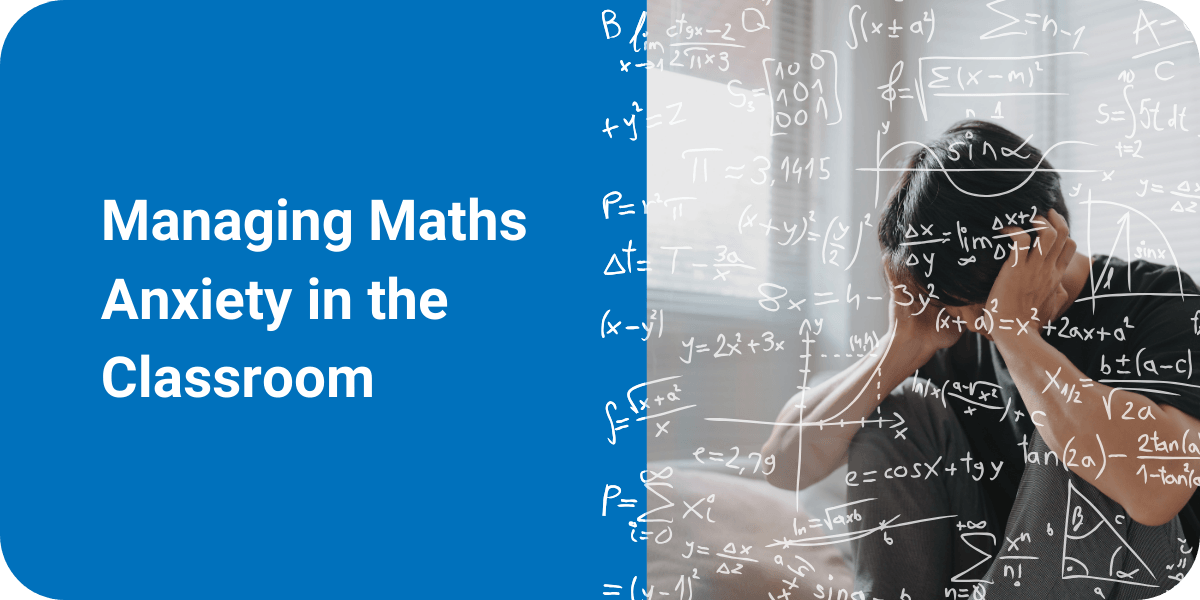
Maths anxiety is not a new concept, but the scale of it is becoming impossible to ignore. Recent studies indicate that 66.74% of Grade 10 learners experience some form of anxiety in mathematics. Additionally, learners as young as Grade 4 are presenting early signs of anxiety towards mathematics.
When learners panic, their thinking brain goes offline, making it physiologically harder to process information, follow steps, or solve problems. In other words, anxious learners aren’t “being dramatic” or “not concentrating”; their bodies are in a stress response that blocks learning.
So, how can educators help learners overcome this barrier and build confidence in mathematics? In a recent Advantage Learn Educator Session, counselling psychologist Alison Lees and psychiatric OT Ashira Moonsamy sat down with us to discuss maths anxiety and share fast, classroom-ready tools to calm nerves, boost confidence, and improve results.

Maths anxiety refers to the intense feeling of tension, worry, or fear that interferes with mathematical performance. It can show up as:
- Fear of making a mistake
- Avoidance of numbers or worksheets
- Freezing during tests
- Feeling overwhelmed even when content is familiar
And because anxiety in mathematics affects how the brain processes information, even capable learners may “blank out” or underperform during high-pressure moments.

1. Emotional triggers
Learners often attach emotions to maths based on:
- Past failure
- Harsh feedback
- Public comparison or embarrassment
- Feeling “not smart enough”
These emotions can compound over time, shaping a learner’s long-term self-belief.
2. Environmental triggers
The classroom environment plays a role, too. Examples include:
- Fast-paced delivery without time to process concepts
- Too much visual stimulation (busy walls, excessive charts, noise)
- Pressure to perform from parents or peers
For many learners, anxiety towards mathematics begins years before high school, sometimes as early as Grade 4, and becomes reinforced as they progress.

Alison used the hand-brain model to explain what happens when a learner becomes anxious:
- The emotional brain (amygdala) senses danger
- The logical brain (prefrontal cortex) “goes offline”
- Learners physically lose the ability to reason or process steps
Mathematics requires sequencing, logic, and problem-solving, none of which are accessible when stressed. That’s why telling a learner to “just focus” doesn’t work.

1. Build a safe and calm classroom environment
A regulated learner is a teachable learner. Consider how your classroom either soothes or overstimulates: overly busy walls, competing posters, and visual noise can increase anxiety. Aim for clarity and intentionality; reference charts placed where learners can find them, uncluttered board space, and tidy desks.
Practical tweaks:
- Curate a few high-value visual aids at eye level (methods, key formulae, worked examples).
- Keep “just-in-time” resources (manipulatives, quick guides) accessible at stations rather than covering every wall.
- Establish short, predictable opening routines in lessons, so learners settle quickly into thinking mode.
2. Regulate the body to unlock the brain
Because anxiety towards mathematics is a physiological state as much as a psychological one, brief regulation breaks can serve as cognitive primers. Two minutes of structured breathing can lower heart rate and bring the prefrontal cortex “back online,” making reasoning possible again.
Try this class-wide before a quiz or challenging problem set:
- Box breathing (2 minutes): Inhale 4 counts, hold 4, exhale 4, hold 4. Repeat.
- Invite learners to place one hand on the chest, one on the belly to feel the breath slow and deepen.
3. Use movement and humour to reset attention
Short, playful resets discharge excess energy and reduce cortisol, especially helpful just before assessments. Think of them as micro-interventions that buy you sharper attention for the next 20–30 minutes.
4. Reframe the inner script, not just the method
Many learners struggle with mathematical procedures, but they are also battling the narrative running in the background. Build in micro-moments to model and practise replacement thoughts that turn panic into process:
- “I’m terrible at this.” → “I don’t need the whole problem, just the next step.”
- “If I get stuck, I fail.” → “Getting stuck shows me where to learn.”
- “There isn’t time.” → “I’ll allocate two minutes per mark and move on.”
One suggestion is to write these reframes at the top of practice papers. Invite learners to pick one and read it silently before they start.
5. Focus on foundational concepts
Sometimes anxiety in mathematics is really cognitive overload dressed up as fear. If foundational concepts are shaky, new topics feel far more confusing or overwhelming. Educators can plan in periodic “concept pit-stops” that revisit essentials to help solidify key concepts.
Make it normal to revisit the basics:
- Open with a 5-minute recap on high-leverage subskills.
- Spiral foundational questions into new content.
- Celebrate accuracy and strategy selection, not speed alone; this de-pressurises learners who process more slowly.
Used together, these routines transform the classroom into a space where anxiety towards mathematics is acknowledged and actively managed, and where learners experience the steady rhythm of regulate → think → try → improve. Over the weeks, you’ll notice fewer “freeze” moments, more willingness to attempt non-routine questions, and a quieter confidence that carries into assessments.
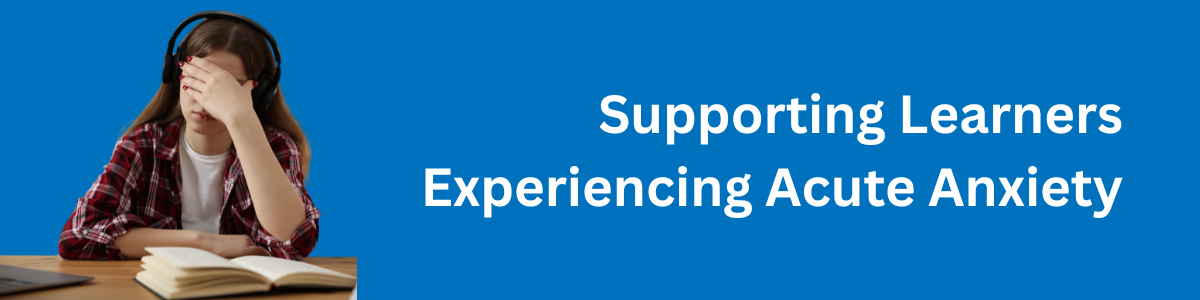
If a learner is crying, unable to breathe, or frozen during a test, here are some options educators can try:
- Pause the test
- Guide slow breathing
- Offer movement (walk to bathroom, splash cold water on face)
- Use grounding techniques (touch something cold, count backwards from 20)
Remember, you are not expected to be the counsellor, but you can help regulate the moment and refer to the right experts when it’s needed.

Supporting a learner experiencing anxiety towards mathematics doesn’t happen in isolation. Teachers see one part of the child’s world, and parents see another. When those two perspectives come together, intervention becomes far more effective. The challenge is that conversations about anxiety can be emotionally charged, especially when parents feel defensive, overwhelmed, or unsure of what to do. Instead of framing the discussion as a problem to be corrected, frame it as a shared effort to support the learner’s wellbeing and confidence.
Lead with observations, not conclusions
Parents are more receptive when you describe what you’re seeing rather than diagnosing the child’s emotional state.
Instead of:
“Your child has maths anxiety.”
Try:
“I’ve noticed that during problem-solving tasks, ______ begins strong and then shuts down when she gets stuck. She often avoids eye contact and becomes quiet. I want to understand what this might mean and how we can support her together.”
Use neutral language and factual observations
- She freezes when the timer starts.”
- “He knows the method verbally but can’t apply it on paper during assessments.”
These statements show concern, not judgement.
Invite the parent into the problem-solving process
Parents may carry their own anxieties about their children’s school performance, and sometimes those anxieties spill over into unrealistic expectations. By asking open-ended questions, you shift the conversation from potential blame to collaboration:
- “Have you noticed similar reactions at home?”
- “Is there anything happening outside school that might be adding pressure?”
- “What helps your child calm down when they’re feeling overwhelmed?”
This gives parents permission to contribute, reflect, and partner with you.
Share strategies, not responsibilities
Parents often worry that a conversation with a teacher means being asked to “fix” something. Instead, offer a few clear, low-effort, actionable steps that reinforce what you’re doing in the classroom.
Examples you can share:
- Encourage short study sessions instead of long marathons.
- Try brief breathing or grounding exercises before homework starts.
- Avoid statements that link maths to intelligence (“our family just isn’t good at maths”).
When a learner sees adults rooting for their growth, their nervous system interprets maths as safe, not threatening, which can help reduce anxiety towards mathematics.
Final Thoughts
Maths anxiety is not a reflection of intelligence in our learners. It’s a physiological stress response that prevents learning. By fostering emotional safety, slowing down to build fundamentals, and introducing regulation strategies, educators can dramatically reduce anxiety towards mathematics and unlock learners’ confidence and potential.
To watch the full conversation with Alison and Ashira, visit our YouTube channel here.
This article was originally published on 19 Dec 2025

About the author
Caryn Dickens
I am a Content Creator for Advantage Learn. I believe in the power of knowledge and possess a passion for education. Together, we can shape the future of accessible, tech-driven learning and empower generations to change the world for the better.
Is Your Grade 8 Learner Ready to Go Further in Maths?
Uncategorized
Education
Further Studies
Introducing the Grade 8 Advanced Maths Programme by Advantage LearnThere is a group of learners in every Grade 8 classroom who finish their Maths work... Read more
Choosing Your NBT Prep Learning Style
Uncategorized
How to Choose the Right NBT Prep Learning StylePreparing for the NBTs can feel overwhelming at first. Not because the work is too difficult, but becau... Read more
Inside Our Newly Upgraded NBT Course
Uncategorized
We’ve completely upgraded our Online NBT Preparation Course to give students a smarter, more focused way to prepare. Instead of working through conten... Read more
Do you want better Maths results?
Maths Online is a bank of over 2000+ extra lessons. Furthermore, gain access to our teacher support to help you when you need it!
More info